
In a quiet sunlit corner of the yard in Upstate New York, far away from the madding crowd, I sit and watch the leaves slowly and aimlessly float to the ground. It is lovely crisp Fall morning and everything around is bathed in sunlight and an orange hue. On the other side of the Atlantic Ocean in the tropics where I grew up, the trees stay green all year long. They don’t lose their leaves. I was twelve when I first saw the wonder and beauty of Fall. I watched a home movie of my aunt’s trip to North America, spell bound by the massive swaths of color in the trees–the golds, yellows, oranges, reds, and browns of the leaves. Today, I train my eye on a yellow leaf as it slowly flutters down to join its buddies.
In the woods, leaves can just stay where they land. They’ll decompose and add nutrients back to the soil. In a backyard though, the fallen leaves become a clean-up job for somebody. 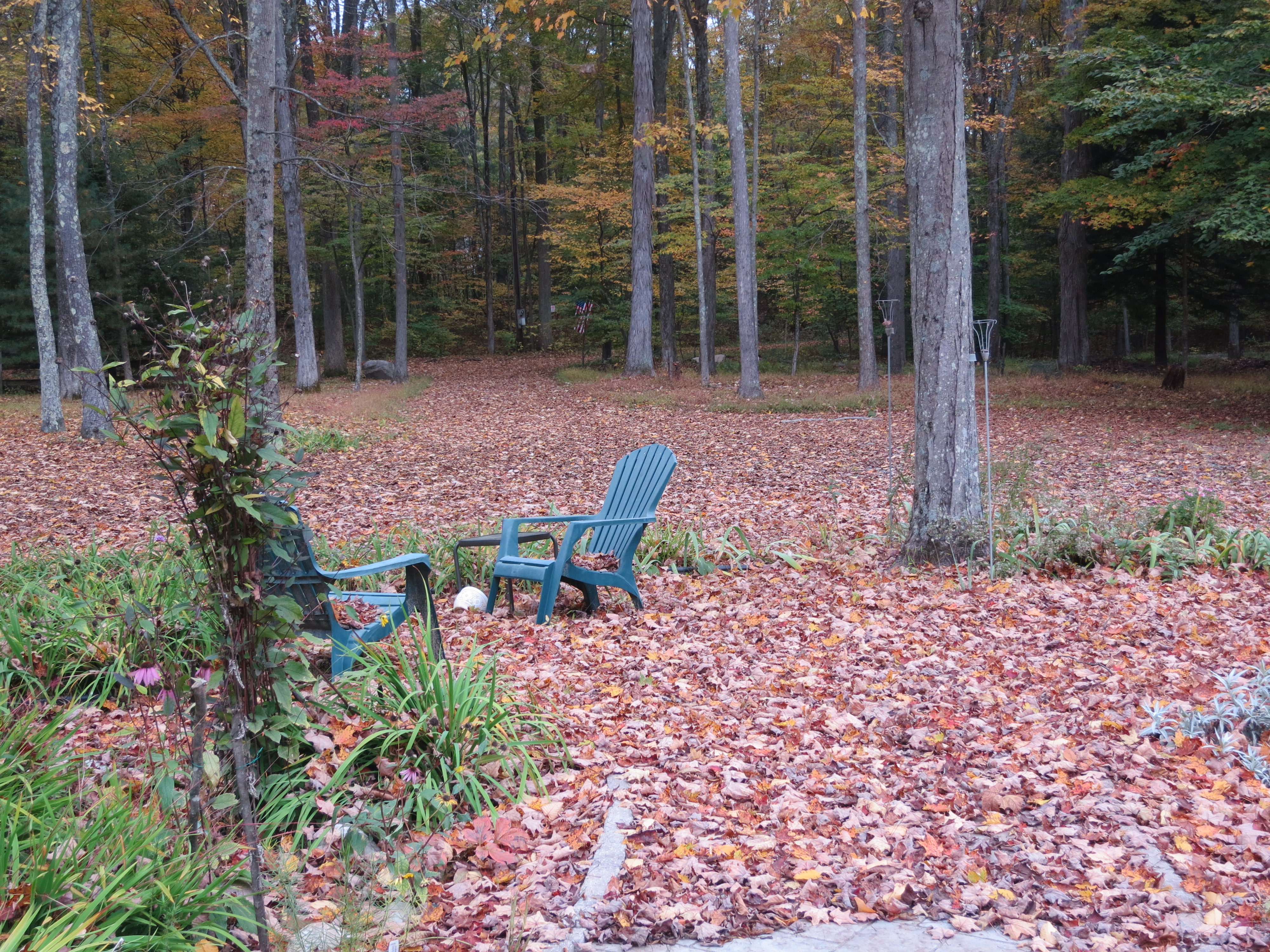 I have a friend who doesn’t like clearing up leaves. He finds no joy in the task. To him, fallen leaves conjure up a problem. His solution is to chop down every tree in his backyard. Removal of the offender is his way of addressing the issue. But there are other ways to deal with the leaves without killing the trees.
It does however, require a love and respect for that which we humans did not make, and a willingness to take the time to find alternate solutions to problems.
This “cutting down of trees to avoid having to deal with leaf removal” reminded me of the “problem” children who fall behind in schools –and how the American educational system deals with them. The children eventually drop out, or are pushed out or are kicked out. It’s faster, sometimes easier to chop the tree down, or to push the kids out, than to work on what’s really needed.
This is the story of one little girl in first grade in a Harlem New York school who was almost left behind. But she wasn’t. She had a tutor, a Reading Buddy who worked with her at school every morning for 30 minutes each day for an entire school year.
Late September, after spending two weeks in the classroom, getting to know her four first grade tutees, one of my graduate students found herself not knowing how or where to begin working with a little six year old girl who couldn’t read. The grad student had been one of the ones selected to work as a Reading Buddy in a school in Harlem NY. The classroom teacher had selected the four lowest readers for Reading Buddy help.
“Three of my four kids are fine, and we’ve begun working well”, my Reading Buddy said, “but I don’t know what to do with the fourth one. I think she is cognitively impaired.”
“How’d you come to that conclusion?” I asked. “You’ve only just met her.”
“She retains nothing. I show her a small two letter word like ‘to’ on one page, and she’s forgotten it by the time we get to the very next page. She retains nothing. Nothing!”
Looking and sounding more and more frustrated, she continued, ” And her teachers agree, something is wrong with her. I think she needs to be tested”.
Tested that is, for a cognitive impairment. The teachers and now the Reading Buddy had assumed that there was something wrong with this little girl– something not normal that was preventing her from learning. She must have had a deficiency, an impairment. Hence, cognitive IMPAIRMENT — something must be wrong with the child’s brain.
My 25 year old white female graduate student was a committed and caring individual with the right attitude for working with struggling learners. She wanted to succeed. She was a willing self starter who sought me out for this experience. She was a psychology major, and her training had prepared her to look for problems. Her tutee, a beautiful sassy black female first grader did indeed have a problem. She couldn’t read! She couldn’t even recognize two letter words. The classroom teacher had told me that she was the worst in the class.
“If there was a minus 72 on the scale, that’s where she would be!” said the teacher.
But like my friend who didn’t like clearing up leaves, the only solution that presented itself to them was a radical one…elimination from the traditional classroom where she wasn’t learning. The decision was made quickly.. she was cognitively impaired and therefore needed to be removed, somewhat like the trees had to be gotten rid of.
“Cognitively impaired“…where do we get the nerve to cut off a six year old child’s opportunity to learn…cut her off in September, at the beginning of her first grade year? To decide in September that she was already impaired, was akin to cutting down a perfectly healthy tree because we weren’t willing to do the work necessary for success in the given situation.
My job now was to interrupt that kind of thinking–the thinking that didn’t see the possibilities — that presented little hope for success for the child. To work successfully with this child would require a a shift in attitude and in thinking about the issues of teaching and learning. It isn’t that we don’t know how to teach, rather, there are many who just don’t believe that it is possible with poor children or children of color and are not willing to put in the time and effort needed. Cut down the entire tree –that’s the easiest way out.
So began my discussions with this Reading Buddy/graduate student.
“Can she walk?” I asked.
“Yes.”
“Does she have any difficulty walking or running?”
“No.”
“Can she talk?”
“Yes.”
“Does she get mad with you if you don’t let her do what she wants to do?” I asked again.
“Yes she does. She has a strong will and knows what she likes and dislikes and she doesn’t like reading.”
“Her brain seems to be working very well” I said. “Let’s not jump to the cognitively impaired diagnosis just yet. Let’s try something else. I’d like you to take a skipping rope to school and let’s see if she can skip–jump rope. There’s some brain research that makes a connection between skipping and the brain’s ability to decipher text”.
A week later the Reading Buddy reported that the little girl was excellent at skipping/jumping rope.
“Well, let’s go back to basics” I said. “Let’s check to see if she knows her alphabet… the letter names and the letter sounds.”
It turned out that this 6 year old didn’t know any of her letters, so instead of “chopping down the tree”, the work that had to be done was to teach…to teach her what she did not know –the letters and letter sounds of the English alphabet.
By the following Spring this little girl won the class prize for knowing -reading and spelling – 100 sight words! How? She had a Reading Buddy who worked with her individually every day for 30 minutes a day for the entire school year. With the cognitively impaired diagnosis thrown out of the window, the work was to start at the beginning…teaching and learning the alphabet, the letter names and letter sounds that provided the foundation of the language. Her progress shocked her teachers who could hardly believe that this was the same child.
The Reading Buddy was willing and able and provided the daily consistent skill building, teaching and support that this child needed.
“In my degree program they teach us how to diagnose but they don’t teach us how to treat.” said the Reading Buddy. “My friends tell me that I got two degrees. One that I paid for, and the other one working with you.”
 All About Learning
this is a beautifully written, carefully crafted and full of life and wisdom blogpost. Thank you Dr. D. Now and always. xo 2 u. YSR
This is a beautifully written, carefully crafted, full of life and wisdom blogpost. Thank you Dr. D. Now and always. xo 2 u, YSR
Dr.Dawn, this was such an inspiring article. Thanks for having the courage and knowledge to share how it’s the alternative methods in teaching that make a difference! Just a little time to understand the child, and a little attention, hours a long way. I’m sounding like you know who! 😉
Thanks again for a great read. Keep it coming!
Renate
You’re so right! In every facet of learning, including the currently-fashionable STE(A)M, foundational learning is so vital. This is especially so when delivered by patient, empathic teaching.